Summary
Wondering what is on-duty meal period under California law? It is a paid break where an employee remains responsible for work duties. California allows this arrangement only in limited situations. The job must prevent complete relief from duty, and a valid written agreement that the employee can revoke is generally required.
Table of Contents
A lunch break during a busy shift can disappear quickly. You might work at a retail store along Mooney Boulevard, a restaurant near Downtown Visalia, a health care facility, or another workplace serving customers throughout Tulare County. Your supervisor tells you to eat, but you still have to answer calls, help customers, monitor equipment, or remain available if something comes up.
This situation may leave you wondering what is on-duty meal period, and whether being expected to work while eating is actually legal in California.
An on-duty meal break is not automatically unlawful. However, California limits when employers can use this arrangement. The nature of the work must prevent an employee from being completely relieved of duty, and specific requirements generally apply to on-duty meal period agreements.
Simply being busy, understaffed, or working during peak hours does not automatically give an employer the right to keep you on duty. Whether you work in retail, hospitality, health care, security, or another Visalia industry, understanding these rules can help you recognize when a workplace practice may cross the line into a wage-and-hour violation.
Below, we explain when on-duty breaks are allowed, what makes an agreement valid, how meal period waivers differ, and what California workers can do when their break rights are not respected.
What Is an On-Duty Meal Period Under California Law?
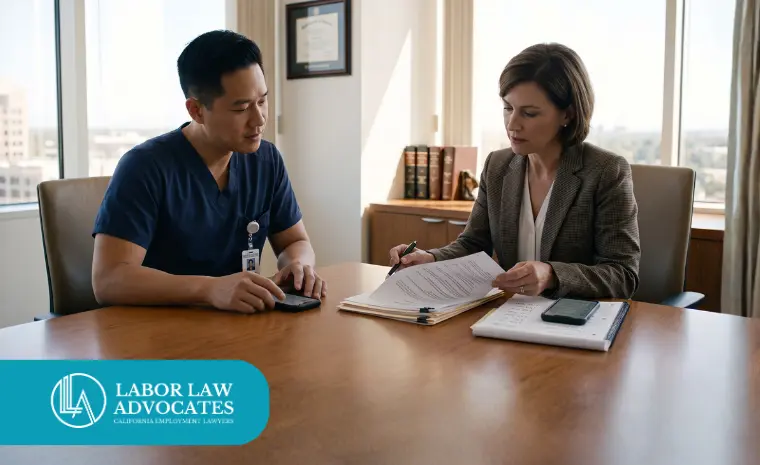
If you eat at your desk, answer customer calls during lunch, monitor equipment while eating, or remain responsible for patients during your break, you may be wondering what an on-duty meal period is and whether your employer can legally require it.
Under the California Labor Code and applicable Industrial Welfare Commission rules, most covered employees who work more than five hours must receive a 30-minute break for a meal. During a standard off-duty break, the employer generally must relieve the employee of all duties and give them a reasonable opportunity to use the time for their own purposes.
An on-duty meal break works differently. The employee remains responsible for job duties. Therefore, that time counts as hours worked and must be paid.
However, California does not allow employers to use on-duty lunches simply because the workplace is busy or understaffed. The nature of the work must actually prevent the employee from being completely relieved of duty.
For additional information about workplace breaks, read our guide to California work break laws.
When Is an On-Duty Meal Break Legally Allowed?
California permits this arrangement only under narrow circumstances.
Generally, two major conditions must exist:
- The nature of the job prevents the employee from being relieved of all duties
- The employer and employee have entered into a qualifying written agreement
The California Division of Labor Standards Enforcement applies an objective standard when deciding whether the nature of the work truly prevents complete relief. In other words, an employer cannot create an exception merely by saying that remaining on duty is more convenient.
Examples may include a sole worker at an all-night convenience store or a security employee stationed alone at a remote site. Leaving those positions completely unattended may not be reasonably possible.
Similar questions may arise in some health care environments. However, working in health care does not automatically make every on-duty lunch lawful. The employee’s actual responsibilities and applicable wage order still matter.
The rule focuses on genuine job necessity—not poor scheduling, peak business hours, or an employer’s preference.
What Makes an On-Duty Agreement Valid?
Understanding what is on-duty meal period also means understanding the paperwork behind it.
California’s wage orders impose several requirements on qualifying on-duty meal period agreements.
The Agreement Must Be in Writing
A supervisor cannot create a valid arrangement by simply telling an employee, “You need to eat while you work.”
The agreement must be written.
Working Time Must Be Paid
When employees remain under work obligations, the time counts as hours worked.
For example, an employer generally should not clock an employee out while requiring them to:
- Answer customer calls
- Respond to workplace messages
- Monitor machinery
- Supervise clients
- Remain responsible for patients
- Respond to radio calls
The Employee Must Be Able to Revoke the Agreement
A compliant written agreement must state that the employee may revoke it in writing at any time.
The Job Must Actually Require On-Duty Work
A signature alone does not make the practice lawful.
The employee’s actual job duties must prevent complete relief. Employers cannot ask everyone to sign identical agreements during onboarding and then use those documents to avoid providing ordinary breaks.
California courts have also shaped how employers’ break obligations are interpreted. The California Supreme Court, including in Brinker Restaurant Corp. v. Superior Court, has addressed an employer’s duty to provide lawful breaks and relieve employees of duty.
Decisions from the California Court of Appeals have likewise examined workplace practices and employers’ compliance with California wage-and-hour requirements.
The key issue is often what actually happened at work—not merely what the employer’s paperwork says.
Meal Period Waivers vs. On-Duty Agreements
Meal period waivers differ from agreements that allow an employee to continue working while eating.
California generally permits the first required meal break to be waived by mutual consent when the employee’s total workday does not exceed six hours.
For longer work periods, California may also allow the second required break to be waived when the total workday does not exceed 12 hours, provided the first break was not waived.
That is different from an on-duty agreement.
Arrangement | What It Means |
Meal period waiver | Employee and employer mutually agree to waive a break when California law permits |
On-duty agreement | Employee continues working during a paid break because the nature of the job prevents complete relief |
Rest break | Separate paid rest time governed by different California requirements |
Mutual consent alone does not make an on-duty arrangement valid. The nature of the work must independently justify it.
Employees should also distinguish meal breaks from a rest break. California wage orders generally provide separate paid rest periods based on the employee’s total daily hours and work periods.
When Does an On-Duty Meal Break Violate California Law?
An arrangement may violate California wage-and-hour law when employers use it as the normal way of doing business rather than as a limited exception.
Warning signs may include:
- You routinely work through lunch
- You clock out while continuing to perform job duties
- A supervisor interrupts your break to give you assignments
- You must remain available by phone, radio, or email
- You continue serving customers
- Another employee could reasonably cover your position
- You never signed an agreement
- The agreement cannot be revoked
- You revoked it in writing, but management ignored your request
- Management pressured you to sign
- Employees are told that meal period waivers are mandatory
- Staffing shortages are used to justify working through lunch every day
The California Supreme Court has made clear that employers must provide employees with a genuine opportunity to take legally compliant breaks. Employers cannot pressure or encourage employees to keep working in a way that undermines those rights.
Likewise, the actual circumstances remain important when courts evaluate on-duty meal period agreements. An employer’s written policy may look compliant, while everyday workplace practices tell a different story.
For example, imagine a Visalia retail worker whose manager says, “Go ahead and eat, but keep your radio on. We may need you.”
If the employee remains responsible for responding to requests, the worker has not necessarily been relieved of duty. Whether the arrangement is lawful depends on the job, written agreement, and applicable wage order.
Learn more in our guide to California meal break protections.
How Can You Prove Your Employer Improperly Required You to Work Through Lunch?
Employees often assume they cannot prove a break violation because supervisors gave instructions verbally.
However, many forms of evidence can help establish what actually happened.
Keep copies of:
- Timecards
- Work schedules
- Pay stubs
- Employee handbooks
- Written agreements
- Meal period waivers
- Emails and texts
- Workplace chat messages
- Break schedules
- Computer login records
- Phone records
- Supervisor instructions
- Coworker statements
- Personal notes documenting interruptions
Specific details are more useful than broad statements.
Instead of writing, “I worked through lunch all week,” document the date, scheduled break time, duties you performed, who instructed you to work, and whether you remained clocked in.
Also, preserve any written agreements. Their wording may show whether your employer followed the applicable wage order and whether you had the right to revoke the arrangement.
If your payroll records do not reflect all the hours you worked, review our guide to reporting unpaid wages in California.
What Can You Recover if Your Break Rights Were Violated?
California law may require an employer to pay an additional one hour of pay at the employee’s regular rate of compensation for each workday that a required meal break was not provided.
The regular rate of pay can involve more than an employee’s basic hourly wage. Depending on the circumstances, certain nondiscretionary compensation may affect the calculation.
For a simplified example, suppose an employee’s applicable regular rate is $24 per hour, and the employer failed to provide a compliant break on 15 workdays.
The potential premium would be:
$24 × 15 days = $360
Actual wage claims can be more complicated.
They may involve:
- Unpaid working time
- Overtime
- Incorrect regular-rate calculations
- Missed rest breaks
- Multiple affected work periods
- Other wage-and-hour violations
If you were clocked out while continuing to work, you may face issues beyond the one-hour premium pay, as employers generally must record and compensate all working time.
The California Labor Commissioner accepts wage claims from workers seeking unpaid wages and applicable break premiums.
For more information, read our guide to calculating unpaid wages.
How Can an Employment Attorney Visalia Workers Consult Help?
Employees often hesitate to question workplace practices because they fear retaliation, reduced hours, discipline, or losing their jobs.
However, California workers have the right to understand whether their employer complies with state wage-and-hour laws.
An employment attorney Visalia can help evaluate:
- Daily work periods
- Job responsibilities
- Timekeeping records
- Pay statements
- Rest break practices
- Meal period waivers
- On-duty meal period agreements
- Employer policies
- The applicable wage order
- Whether genuine mutual consent existed
- Whether the nature of the work justified staying on duty
- Whether all working time was paid correctly
Our attorney can also determine whether the problem affected only one employee or resulted from a company-wide policy.
For example, if dozens of employees were required to sign the same agreement even though their duties allowed them to leave their workstations, the issue may extend beyond an individual wage claim.
An experienced employment attorney whom Visalia workers trust can evaluate the records, explain available remedies, and help determine the next appropriate step.
Frequently Asked Questions
Is an on-duty meal break legal in California?
Yes, but only in limited circumstances. The nature of the job must genuinely prevent the employee from being relieved of all duties, and a valid written agreement is generally required.
Do on-duty meal period agreements have to be in writing?
Yes. California wage orders generally require a written agreement for a paid on-the-job break. The agreement must also state that the employee can revoke it in writing at any time.
Are meal period waivers the same as on-duty agreements?
No. A waiver means the employer and employee agree, through mutual consent, to skip a qualifying break when California law permits. An on-duty agreement means the employee continues working during a paid break because the job prevents complete relief.
Do I still receive a rest break if I have an on-duty agreement?
Generally, rest break requirements are separate. The applicable wage order determines the required rest time based on daily hours worked. An on-duty lunch agreement does not automatically eliminate other break rights.
What should I do if my employer makes me work through lunch?
Keep records of when you worked, the tasks you performed, whether you were clocked out, and who instructed you to remain available. Preserve agreements, schedules, and pay records. You may also contact the Labor Commissioner or an employment attorney whom Visalia workers can consult.
Protect Your Right to a Lawful Break
Understanding what an on-duty meal period is helps you distinguish a narrow legal exception from an employer simply expecting employees to work through lunch.
California law generally does not allow employers to keep workers performing duties without proper compensation simply because the workplace is busy or staffing is difficult. Your actual job responsibilities, work periods, written agreement, regular rate of pay, mutual consent, and applicable wage order all matter.
Labor Law Advocates helps California employees understand wage-and-hour violations, unpaid wages, improper break practices, and other workplace concerns. If you believe your employer required you to remain on duty without satisfying California law, contact us for a free, confidential consultation and learn what options may be available.